Terracotta
Earthy texture, a little more attention to moisture.
What to check before choosing
Check filled weight, drainage and the maker’s frost guidance. Porous unglazed clay can dry faster than less porous materials.
For gardeners in the United States. Free planning; materials and labor cost extra.
A balcony corner, a sunny patio, a small backyard. Choose containers that work for your space, then make a plan to fill them.
Find your container type Already measured? Calculate your mix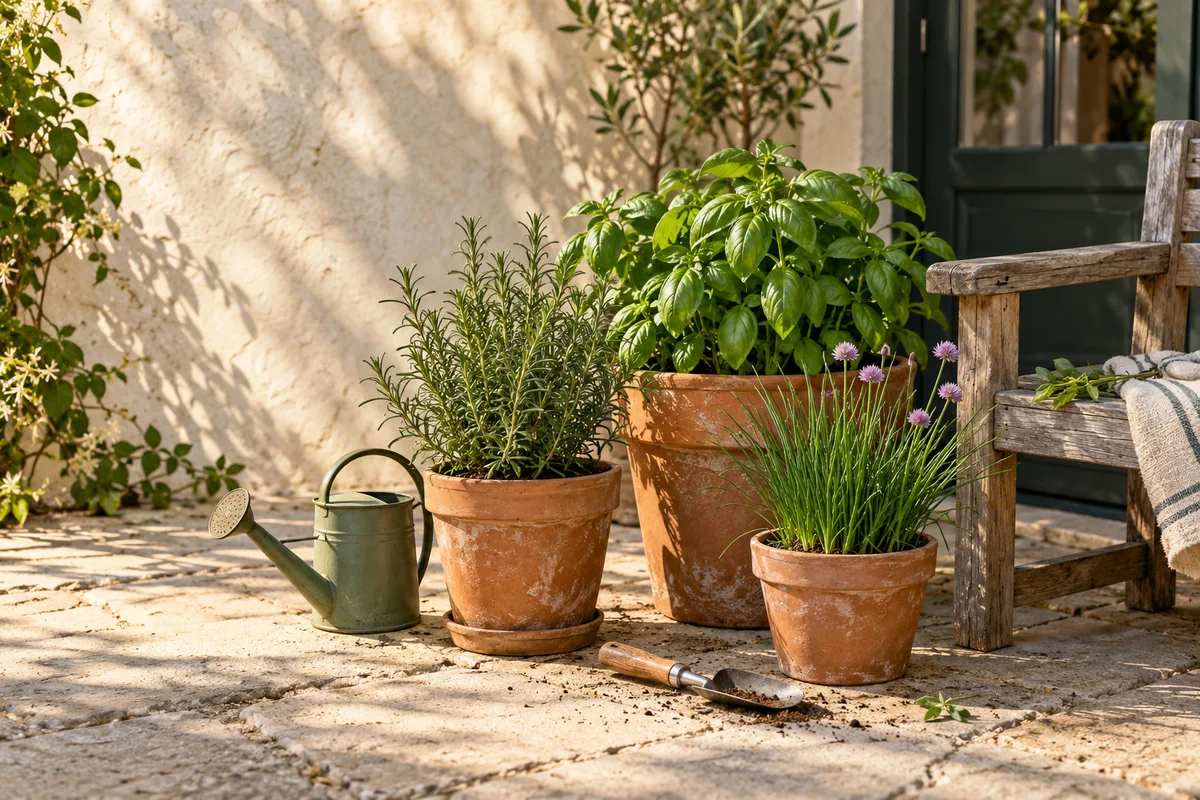
Browse container types, not retail products. These filters narrow the guide; they do not certify suitability for your home.
18 container types to explore.
Earthy texture, a little more attention to moisture.
Check filled weight, drainage and the maker’s frost guidance. Porous unglazed clay can dry faster than less porous materials.
A lighter empty pot for a flexible layout.
Check outdoor/UV suitability, wall strength and stability. Filled mix and water can still make a lightweight pot heavy.
A statement container with a finished surface.
Inspect drainage and cold-weather guidance. Use a draining inner pot if the decorative outer container has no outlet.
A long planting line for a ledge or freestanding stand.
Material and mounting vary. Check loaded weight, secure support, drainage below and building rules before attaching anything.
A contained growing area with working height.
Check internal depth, liner/drainage design, assembly and full-load limits. Choose the growing medium for the planting plan.
A flexible fabric option for a seasonal setup.
Check usable volume, handles and drainage. Protect the surface beneath; do not assume handles are rated to move a full wet bag.
A reservoir system for a more deliberate watering routine.
Check the reservoir, overflow outlet and instructions for your plant and climate. A reservoir does not remove the need to monitor moisture.
A suspended planting spot that uses overhead space.
Check the hook, support and full wet weight. Allow safe clearance and consider wind exposure, watering access and drips below.
A narrow planting line designed for a compatible railing.
Confirm the rail profile, mounting hardware, building rules and loaded weight. Secure it as directed and do not place it above people or a public walkway without suitable protection.
A crisp edge for a contemporary planting arrangement.
Check drainage, corrosion protection, sharp edges and heat exposure. Follow the maker’s guidance for liners, outdoor use and plants.
A substantial container for a layout you intend to keep.
Check delivery access, weight and the supporting surface before filling. Confirm drainage and freeze/thaw suitability; moving it may require equipment.
Stacked pockets or tiers for a smaller footprint.
Check anchoring, usable root volume per pocket and water distribution. Materials vary; follow assembly, load and mounting instructions.
A molded container with a clean, architectural finish.
Compare filled weight, wall strength and drainage. Check the manufacturer’s outdoor and temperature guidance.
A freestanding wooden box for a defined planting area.
Check timber suitability, liner design, drainage and maintenance. Follow the maker’s guidance for edible plants.
A long planting run for a patio edge or garden boundary.
Material varies. Check full weight, drainage, internal depth and stable placement before filling.
A decorative focal point with a narrow or raised profile.
Compare the opening with usable root space. Check stability, weight and drainage; follow the maker’s frost instructions.
A planting pocket attached to a suitable vertical surface.
Confirm mounting permission, fixings, full-load limits and water management. Protect the wall and areas below.
A practical inner container for growing or a decorative outer pot.
Check usable size and drainage. Empty trapped water from the outer pot and replace damaged containers.
Try another material or reset the filters to compare all 18 types.
| Type | Handling | Drainage check | Before winter / storage |
|---|---|---|---|
| Terracotta | Compare empty and filled weight | Check the outlet is open | Check frost rating and care instructions |
| Resin / plastic | Often lighter when empty | Some outlets need opening | Check UV and temperature guidance |
| Glazed ceramic | Can be heavy and breakable | Do not assume a decorative pot drains | Check freeze/thaw suitability |
| Boxes & raised planters | Check support and full-load limits | Follow the liner and outlet design | Inspect fixings and material care |
| Fabric bags | Check handle and base guidance | Allow water to leave the base | Clean and dry before storage as directed |
Check for a working drainage outlet before filling a pot. A layer of gravel does not replace a missing drainage hole. A draining inner pot can sit inside a decorative outer pot; manage collected water so the roots do not sit in it.
Protect balconies, floors and decks while keeping drainage clear.
Read Iowa State Extension’s container guidanceUse internal measurements, not the widest outside rim. Leave watering space above your fill line. Match the usable root volume to the mature plant and local growing conditions.
These examples show arithmetic only; they are not minimum pot sizes for particular plants.
Inside diameter × fill depth
About 18.5 liters before extra.
Inside length × width × fill depth
About 47.2 liters before extra.
Three straight-sided pots, each 12 inches inside diameter and 10 inches fill depth. Choose herbs and pot sizes for your actual conditions.
Use this checklist for the container you are considering.
Checklist marks stay on this page only; they are not saved.
Independent product-type guidance, not hands-on product reviews. No live prices, stock claims or checkout. Planting advice should be adapted to your site.